Mosaic
A guided film planning tool for first-time filmmakers
Project Overview
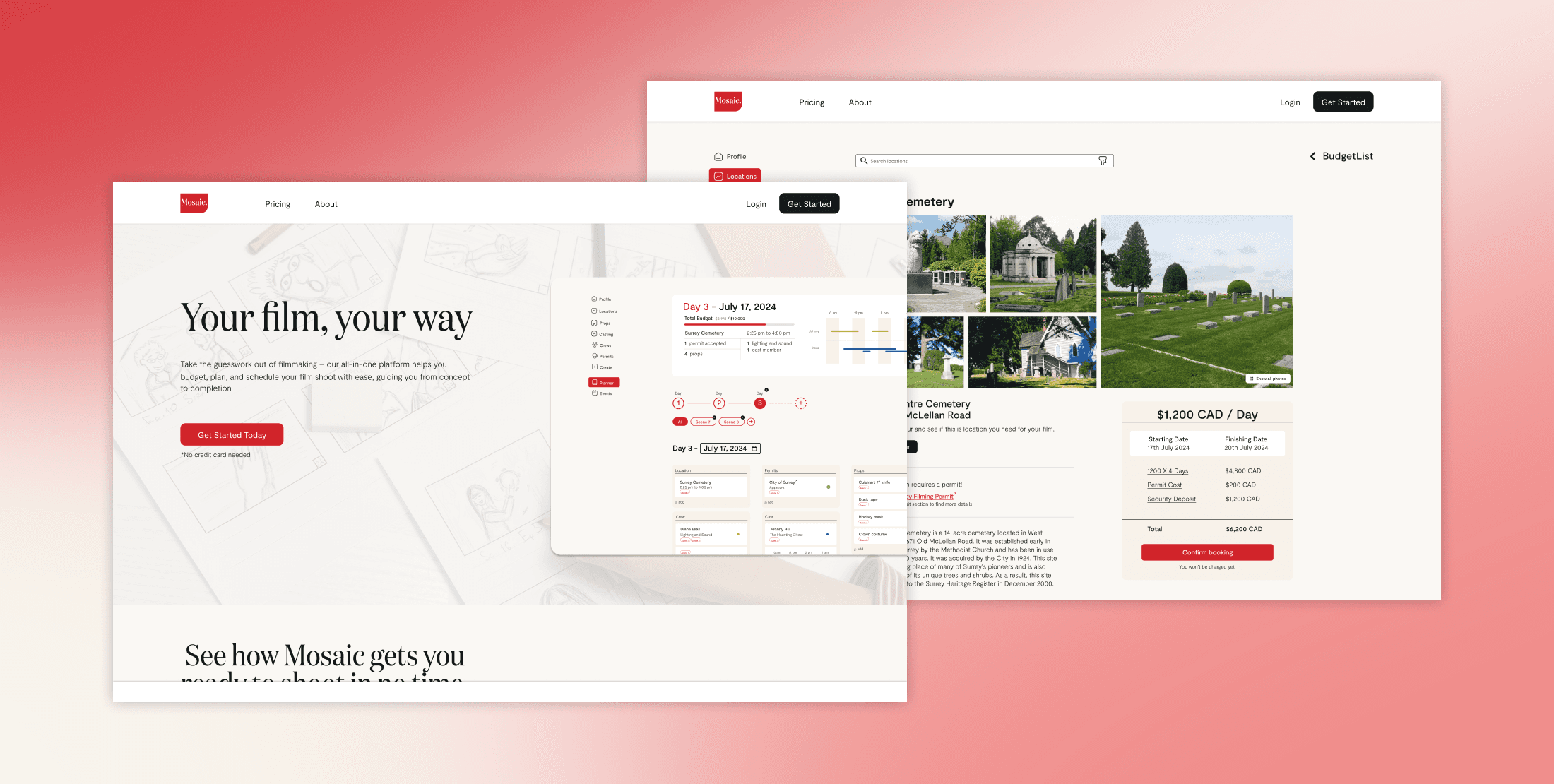
Mosaic is a web-based tool designed to support beginner filmmakers in planning and budgeting their film projects. Completed as part of a senior Interaction Methods course at Simon Fraser University, this 3 month project focused on addressing the uncertainty many new filmmakers face when organizing their shoots. Mosaic guides users through a structured process that helps them build their film plan and generate a realistic, personalized budget.
My Impact
I collaborated with three other designers and led the project’s research and early problem framing. By conducting interviews with filmmakers and synthesizing key insights, I defined our primary design focus and aligned the team around a clear direction. I also led the design and prototyping of the onboarding and planning features in Figma, ensuring the experience felt structured, flexible, and approachable for beginner filmmakers.
Team
Anmol Sekhon
Wei Xing Deng
Karanjit Singh
Baolati Pazeli
Platform
Figma
Figma Prototype
Timeline
May - July 2024
3 Months
Deliverables
User Personas
Wireframes
App Prototype
Final Report
Exploration
Defining the Project Scope
We began by targeting new filmmakers who were preparing submissions for the Vancouver International Film Festival (VIFF). Our initial goal was to explore how we might streamline the submission process and reduce friction for emerging creators. During this phase, our team generated multiple “How Might We” statements to frame the problem space and clarify our assumptions before moving into user research.

User Research
Understanding the Industry
To better understand the film industry, I conducted interviews with five filmmakers across varying levels of experience and encouraged participants to expand on their responses by focusing on the what, how, and why behind their experiences. I then collaborated with my team to synthesize the findings, organizing interview data into themes and key insights that informed our next steps.


Insights
Identifying Challenges
When asked about how they entered into the film space and what they struggled with, many of the filmmakers expressed how difficult it was planning their film projects and budgeting accordingly. This pain point ultimately directed our project into what Mosaic is.
80%
of our participants said they would want help with the budgeting aspects of their films.
60%
of our participants said they have an idea for a film but don’t know where to begin.
60%
of our participants rely on scattered resources instead of a structured planning process.
Representation
User Persona
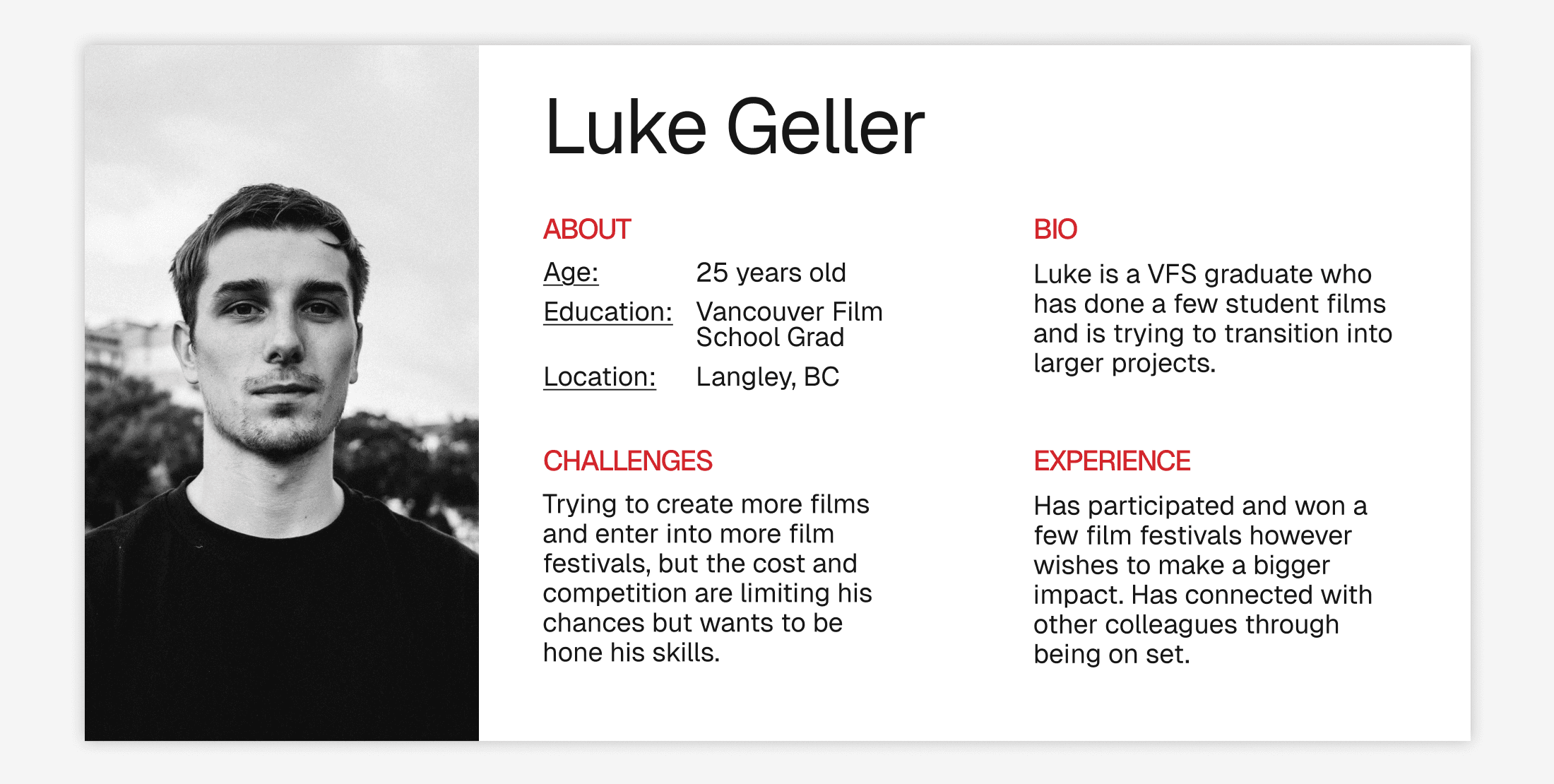
The interviews allowed us to create personas based on the collective experiences and advice the filmmakers provided. Our persona is Luke, a recent graduate from a film program at Vancouver Film School but does not have a lot of experience doing it entirely on his own.
Definition
Refining the Problem Statement
Peer feedback and user research revealed that focusing solely on VIFF submissions was too narrow. As we synthesized insights from interviews, it became clear that beginner filmmakers were struggling earlier in the process with planning and budgeting their projects. We reframed our “How might we” statement to reflect this broader need, which led to our final problem definition:
Problem Statement
How might we help beginner filmmakers with planning and managing their budget in an efficient and realistic way?
User Flow
Personalizing the Process
Drawing on insights from user interviews, I created an initial user flow map to visualize how filmmakers would interact with the tool. Recognizing the complexity of planning a film project, we prioritized giving filmmakers maximum flexibility in customizing their experience. To streamline the process, I broke down each stage of planning, ensuring essential steps were covered while still allowing users to add their own details for a more personalized workflow.

Initial Designs
Developing Wireframes
With the goal of helping users personalize their experience, I helped design initial wireframes that introduced a step-by-step process to guide filmmakers in creating a plan they could confidently follow. After an onboarding process where users input specific details, the interface would generate tailored recommendations, including budgeting suggestions, to help filmmakers feel more secure in allocating their resources.

Iteration
Incorporating Feedback
The university teaching team reviewed our proposal and wireframes and provided actionable feedback. Key suggestions included adding error prevention to alert users of overlapping bookings and simplifying language throughout the interface. We incorporated these recommendations into the final design to improve clarity, usability, and overall user experience.
Final Solution
Keeping in mind the feedback and refining our interface throughout the weeks, it led to the final design of Mosaic. A web based tool that empowers beginner filmmakers so that they feel more confident in their work and continue to grow their creativity.
Getting Started
From the landing page, multiple options are visible such as About and Pricing, and when Get Started is clicked, Mosaic takes the user through a detailed onboarding process to get their film project started ending off with a recommended customized budget.
Build Your Film
The sidebar navigation takes users through categorized sections of a film in which they can choose the necessary elements for their film. They may book filming locations, select props, hire cast and crew, and any customized expense they may want to add. With cast and crew, users can see their profile that will detail their skillset and qualifications so filmmakers can make informed decisions. All of these choices are visible via the BudgetList tab always available on the right-hand side.
Plan Your Shoot
Once all the film elements are added, the planner tab helps users plan their film by day and scene so that they can efficiently film. The planning feature includes a detailed dashboard with a budget and an overview of which elements are needed for what scene. Mosaic has error prevention to alert users that they may overbook a crew mate or a location for a time which is not available.
Reflection
This 3-month project was a truly eye-opening experience that expanded my skillset as a designer. By interviewing filmmakers, I gained valuable insights into their frustrations and desires, which helped me identify design opportunities in real time. Keeping these users in mind, I crafted the wireframes, user flow, and final interface, with a particular focus on the multi-level planning feature.
Given the limited time in the course, I wish I could have conducted usability testing with both beginner and professional filmmakers to further refine the interface based on their feedback. The success of this project was also due to the strong team communication. I learned the importance of exchanging ideas, collaborating toward shared goals, and checking in regularly, which played a crucial role in moving Mosaic forward.